
Do you really need more expensive servers — or will purchasing a LiteSpeed license from an authorized provider in Israel provide you with the same performance boost, with fewer resources, and local support?
In Israel, loading speed and reliability are critical for organic promotion and sales. A LiteSpeed license in Israel allows WordPress and WooCommerce websites to respond quickly to loads, with advanced caching and HTTP/3. When you choose a LiteSpeed authorized provider , you get a clear path: proper matching to the license type, purchasing a LiteSpeed license in shekels , and technical support in Hebrew from a team that knows the local market.
LiteSpeed for Servers and LiteSpeed for WordPress offer a lean and fast alternative to Apache and NGINX. They help save on infrastructure costs, improve Core Web Vitals , and ensure stability under fluctuating Israeli traffic. Purchasing a LiteSpeed license from a licensed provider in Israel adds transparency, legal tax invoicing, and peace of mind for businesses, agencies, DevOps, and IT managers.
Whether you run an online store, a high-traffic blog, or a content portal, a LiteSpeed license in Israel creates a real competitive advantage: fast response times, strengthened security, and smart scaling. This is how you build a user experience that is measured — and wins — by results.
Main points
- Choosing an authorized LiteSpeed provider guarantees pricing in shekels , a tax invoice, and technical support in Hebrew.
- Lightspeed for Servers and Lightspeed for WordPress improve speed, stability, and Core Web Vitals .
- Buying a Lightspeed license in shekels makes budgeting easier and reduces operating costs.
- Properly matching the license type saves resources and increases infrastructure profitability.
- A LiteSpeed license in Israel provides an SEO advantage in a competitive local market.
- HTTP/3 readiness and advanced caching improve performance under high loads.
Why choose LiteSpeed for WordPress servers and websites in Israel?
Israeli website owners are looking for fast, consistent, and secure response. Combining LiteSpeed performance with proper configuration delivers site speed in Israel even under heavy traffic. This maintains a stable user experience, and technical excellence translates into conversions.
Faster performance under high loads
LiteSpeed Enterprise is built for asynchronous events that provide LiteSpeed for loads and shorten TTFB. Built-in support for HTTP/2 and HTTP/3 (QUIC), along with Brotli and Gzip, increases TPS and RPS against common configurations. The result: website speed in Israel even during peak hours and campaigns.
SSL offloading and server-level caching reduce server times, and maintain LCP CLS INP improvements in real-time measurements. This means pages load faster and forms respond in a timely manner.
Efficient resource consumption and cost savings
Event-driven architecture enables resource efficiency with fewer processes and threads. Under load, CPU and RAM are throttled, and sometimes there is no need to upgrade a cloud package.
Local caching reduces calls to PHP-FPM and MySQL, shortens rendering for dynamic pages, and moderates I/O loads. This translates into a more accurate monthly budget and peace of mind during peak times.
Full compatibility with WordPress and LSCache
LSCache for WordPress provides smart page caching with tag-based purging and ESI for conditional snippets. Object Cache with Redis or Memcached speeds up queries and stabilizes complex websites.
Fast WooCommerce support, image optimization for WebP/AVIF via QUIC.cloud, Critical CSS and JS Defer complete the chain. Full compatibility with .htaccess and cPanel/WHM and Plesk makes it easy to operate.
SEO Benefits in Loading Times and Core Vitals
Core Web Vitals improve when the server provides low TTFB and server-side caching. LCP CLS INP improvement occurs due to efficient compression, lightweight images, and reduced JS blocks.
In Israel, short latency from nearby server locations enhances site speed in Israel and improves mobile bounce rate. Content and e-commerce sites benefit from stronger organic rankings and a smooth purchase path.
Purchasing a LiteSpeed license from an authorized provider in Israel
To get the most out of LiteSpeed , it’s important to purchase from the right place.
What is an authorized supplier and why is it important for reliability and support?
An authorized vendor is an official partner of LiteSpeed Technologies. It guarantees the provision of reliable keys, regular version updates, and uniform deployment guidelines. A customer in Israel receives a local point of contact, Hebrew-language support , and a clear SLA that minimizes downtime.
License types: Site Owner, VPS, Cloud, Enterprise
For owners of one website or a small number of domains, Site Owner licensing will be appropriate. Those running virtual environments in clouds such as AWS, Google Cloud, Azure, or Hetzner will choose
Compatibility check: server resources, number of domains, traffic
Matching a server license starts with mapping CPU cores, memory, and NVMe vs. SATA storage. Consider an operating system like AlmaLinux, Rocky Linux, or Ubuntu LTS, and a control panel like cPanel, Plesk, or DirectAdmin. It’s important to estimate the number of domains, monthly traffic, and load profile like WooCommerce, magazine, or leads, including use of HTTP/3, Redis, or Memcached, and growth expectations.
Transparent purchasing and pricing process in Hebrew and in shekels
The process includes a brief characterization, a detailed price quote in Hebrew with pricing in shekels , and a full breakdown of supported cores, limitations, and support components. After approval, you receive the license key and detailed installation instructions. Payment is available by credit card or bank transfer, with the option of SLA agreements and POC testing.
Tax invoice, regulatory compliance and local support
The provider issues an Israeli tax invoice as required, and covers tax and data control requirements in Israel. Support is provided through local channels and Hebrew support, with short response times and ongoing optimization advice. This maintains a convenient and clear service continuity throughout the life of the license, whether it is a VPS/Cloud license or a LiteSpeed Enterprise license .
Comparing LiteSpeed to Apache and NGINX for eCommerce and Content Sites
Comparing web servers for websites in Israel starts with the processing model. LiteSpeed and NGINX operate in an efficient event-driven approach, while Apache relies on prefork/worker or mpm_event. Under bursty loads, this model produces low TTFB and savings in CPU and memory, which is especially useful when you want performance for WooCommerce or choosing a server for high-traffic content sites .
In terms of migration, LiteSpeed has broad support for .htaccess, mod_rewrite, and mod_security, making the transition from Apache smoother. In contrast, NGINX does not read .htaccess and requires manual rule writing. This highlights the difference between LiteSpeed vs. Apache and LiteSpeed vs. NGINX when looking at implementation time and maintenance costs.
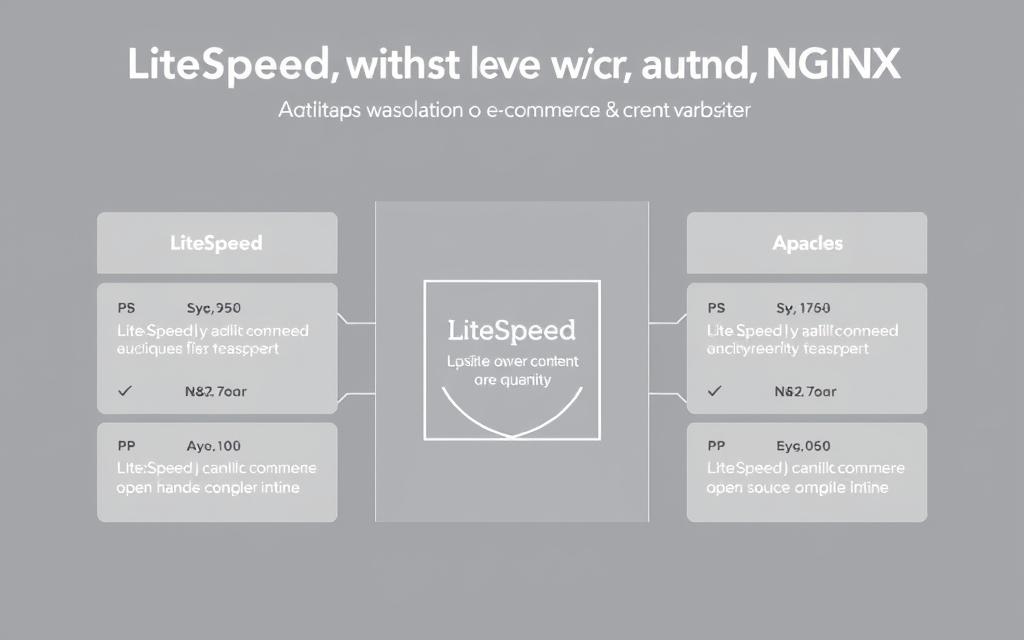
In PHP, LiteSpeed’s LSAPI engine handles multiple connections more stably and faster than PHP-FPM in busy situations. LSCache is built into the core and enables dynamic caching with ESI and objects, which shortens queries and provides
WooCommerce stores benefit from smart cache rules for shopping carts, accounts, and coupons directly from LSCache. Manual tuning is required on NGINX to prevent personal content from being cached. On content-based sites, Object Cache and ESI reduce database load and together improve performance for WooCommerce and any content site server .
For modern protocols, LiteSpeed includes native support for HTTP/3 QUIC , which shortens connection establishment times and helps keep TTFB low even on cellular networks. In Apache, support is limited and relies on external modules, and in NGINX, it depends on a dedicated build of nginx-quic and is not always available in stable releases.
In security and operations, LiteSpeed’s support for ModSecurity and OWASP CRS rules combined with Rate Limiting and application-level Anti-DDoS measures help survive traffic spikes. Integration with cPanel and Plesk makes DevOps easier, and in the LiteSpeed vs. Apache and LiteSpeed vs. NGINX frameworks this is noticeable in daily management and troubleshooting.
In terms of cost-effectiveness, even though it is a commercial license, the savings in resources and development time make LiteSpeed stand out when comparing web servers for Israeli businesses. For stores, improved conversions rely on low TTFB , while for content sites, stability with HTTP/3 QUIC reduces abandonment and optimizes user experience.
Proper implementation: installation, configuration, and optimization for performance
To get the most out of LiteSpeed in cloud and VPS environments in Israel, it is important to combine a systematic process: installing LiteSpeed on a VPS , carefully configuring LiteSpeed , and hardening the server’s security. This results in a noticeable performance upgrade alongside stability and load tolerance, with short response times and creating a reliable foundation for high availability .

VPS/Cloud Installation Steps and Security Hardening
Start by installing LiteSpeed Enterprise on AlmaLinux, Rocky Linux, or Ubuntu, with integration with cPanel/WHM, Plesk, or DirectAdmin. After installing LiteSpeed on your VPS , enable HTTPS with TLS 1.3 and HSTS, update OpenSSL, and restrict access to the admin panel by IP.
Server security hardening includes a Firewall like CSF or ufw, running ModSecurity with OWASP CRS and supplemental rules from Comodo or Atomicorp as needed. Add fail2ban or Rate Limiting to stop brute-force, and ensure daily backups and periodic health checks to maintain high availability .
Configuring HTTP/3, QUIC, and Edge Side Includes
Enable HTTP/3 QUIC in LiteSpeed core and choose a modern cipher like TLS_AES_128_GCM_SHA256. Complement with Brotli at the server level and TCP Fast Open if supported, to reduce connection time and improve TTFB.
For dynamic components, use ESI for WordPress to serve blocks like a WooCommerce cart or user area on top of cached pages. This reduces unnecessary cache misses and maintains a consistent user experience under load.
Smart Caching: Object Cache, ESI, and LSCache for WordPress
Install LSCache for WordPress and set TTL rules and trigger Purge Tags for stock and price events. For the data layer, integrate Object Cache Redis with a preference for UNIX socket on a single server to reduce latency.
Run a scheduled crawler to pre-build cache, optimize images for WebP/AVIF via QUIC.cloud, and use Critical CSS, Lazy Load, Minify, and Combine while testing for compatibility. This combination creates a LiteSpeed configuration that balances speed and accuracy.
Fault diagnosis and monitoring tools to maintain availability
For server monitoring , use LiteSpeed’s Real-Time Stats, and examine access and error logs to identify bottlenecks. In multi-site environments, CloudLinux LVE helps limit abnormal loads.
Track with Netdata or Grafana+Prometheus for advanced metrics, and add UptimeRobot or Better Uptime for external testing. For WordPress, Query Monitor and LSCache Debug Log will reveal cache hit/miss and error conditions, ensuring high availability even under heavy campaigns and traffic.
conclusion
For those looking to upgrade their website performance , choosing LiteSpeed for WordPress is an obvious step. Purchasing a LiteSpeed license from a licensed provider in Israel guarantees a reliable developer, transparent pricing in shekels , a legal tax invoice, and Hebrew support that shortens implementation times and reduces risks. The right combination of LSCache, ESI, and Object Cache improves Core Web Vitals and increases conversion rates.
For e-commerce and content sites, the advantage over Apache and NGINX is evident in low TTFB, efficient load management, and simpler operation. The result is a fast and stable browsing experience on mobile and desktop, with better SEO metrics. This makes upgrading your site’s performance an investment that pays for itself with lower infrastructure and service costs.
The recommended process is clear: characterizing needs, choosing the appropriate license—Site Owner, VPS, Cloud, or Enterprise—based on resources and traffic; installation and hardening; configuring HTTP/3 and QUIC; configuring smart cache; and finally monitoring and continuous improvement. By purchasing a LiteSpeed license from an authorized provider in Israel and with the help of Hebrew-language support , businesses receive a fast track to improving Core Web Vitals, transparent pricing in shekels , and stable results over time.
Bottom line, Lightspeed for WordPress is a growth engine: it shortens loading times, strengthens organic rankings in Hebrew, and stabilizes the user experience even during peak hours. When you add to this transparent pricing in shekels and support in Hebrew, you get a choice that is ahead of the competition and provides day-to-day operational peace of mind.
FAQ
Why should you purchase a LiteSpeed license through an authorized provider in Israel?
Purchasing from an authorized vendor guarantees a valid license key, official updates, and professional support in Hebrew. You will receive transparent pricing in shekels, a legal tax invoice, and compliance with local regulations. This reduces risks, shortens implementation times, and provides a clear SLA.
Which license type is right for me: Site Owner, VPS/Cloud or Enterprise?
For a single site or a few small domains on a small VPS, Site Owner is suitable. For cloud servers like AWS, Google Cloud, Azure, or Hetzner—choose VPS/Cloud by vCPU. For a dedicated server with high cores and traffic, Enterprise is required with advanced WAF and LSCache capabilities. The choice is determined by server resources, number of domains, and monthly traffic.
How does LiteSpeed improve performance compared to Apache and NGINX?
LiteSpeed operates on an event-driven model and handles more connections with less CPU and RAM. LSAPI for PHP is faster than PHP-FPM under load, and LSCache is integrated into the core to cache dynamic pages with ESI. The result: lower TTFB, higher RPS, and stability under extreme loads.
Is there full compatibility with WordPress, WooCommerce, and LSCache?
Yes. The LiteSpeed Cache plugin provides dynamic page caching, tag-based purging, ESI for conditional snippets, Object Cache with Redis or Memcached, and built-in WooCommerce support. There’s also WebP/AVIF image optimization via QUIC.cloud, Critical CSS, and Deferred JS.
How does LiteSpeed contribute to SEO and Core Web Vitals?
A fast server lowers TTFB and improves LCP, resource and image optimization reduces CLS, and JS blocking reduction improves INP. Built-in support for HTTP/3, QUIC, and Brotli shortens mobile load times and improves organic rankings and conversion rates.
What does the purchasing and pricing process in shekels include?
We start with a short characterization conversation in Hebrew, receive a detailed price quote in shekels including VAT, details of license type and limitations. After payment by credit card or bank transfer, a license key and installation instructions are issued. There is transparency regarding monthly/annual costs, installation, configuration and ongoing support, including updates according to the dollar exchange rate.
What parameters are checked for license suitability?
Number of cores and memory, NVMe vs. SATA storage type, operating system like AlmaLinux, Rocky Linux, or Ubuntu LTS, cPanel, Plesk, or DirectAdmin control panel, number of domains, monthly traffic, and load profile—WooCommerce, Leads, or Magazine. Work with HTTP/3, Redis, or Memcached, and growth expectations are also considered.
How is security installed and hardened on a VPS or in the cloud?
Installation is done via a package manager or a dedicated script, with integration into cPanel/WHM, Plesk or DirectAdmin. Configure TLS 1.3, HSTS, Brotli activation, Firewall like CSF/ufw, ModSecurity with OWASP CRS and Comodo or Atomicorp rules, and access restrictions to the panel. It is recommended to integrate fail2ban or Rate Limiting.
How to enable HTTP/3, QUIC, and ESI for optimal performance?
Enable HTTP/3 and QUIC in the server settings, choose a current TLS cipher, and enable Brotli. ESI is configured to load dynamic blocks such as a shopping cart and user area alongside a page that comes from cache. This reduces cache misses and maintains a fast user experience.
What is the recommended caching configuration for WordPress?
Installing LSCache, setting TTL by content types, enabling Purge Tags for WooCommerce events, enabling Object Cache with Redis using UNIX socket on a single server, and enabling Crawler to build cache. Adding WebP/AVIF images via QUIC.cloud, Lazy Load, Minify, and Critical CSS.
What tools are recommended for monitoring and troubleshooting?
Use LiteSpeed’s Real-Time Stats, access/error logs, and open the LSCache Debug Log to check for cache hits/misses. For server monitoring—Netdata or Grafana with Prometheus. For external availability—UptimeRobot or Better Uptime. In WordPress, Query Monitor is recommended for finding bottlenecks.
Is it possible to integrate with a CDN like QUIC.cloud or Cloudflare?
Yes. LiteSpeed works great with QUIC.cloud for optimizations and images, and with Cloudflare in Full/Strict TLS mode. It is important to adjust Cache-Control headers, utilize HTTP/3, and ensure consistent rules for ESI and static files.
How does LiteSpeed affect cloud infrastructure costs?
Event efficiency allows you to handle more traffic with fewer resources. Low CPU and RAM consumption under load postpones server upgrades, reduces MySQL I/O and PHP calls, thereby reducing monthly cost on a VPS or cloud.
What is the fundamental difference between Apache and NGINX in migrating existing websites?
LiteSpeed is broadly compatible with .htaccess, mod_rewrite, and mod_security, making the transition from Apache simple and fast. NGINX requires manual configuration for redirects, rewrites, and WAF. Plus, LSCache is built-in, eliminating the need for third-party solutions.
Is there support in Hebrew and fast response times?
Yes. An authorized vendor provides Hebrew-language support via phone, email, and tickets. Response times are defined in the SLA, with ongoing consulting for performance optimization, scaling, and security hardening.
Do you accept a tax invoice and receipt according to Israeli law?
Absolutely. Billing is done in shekels, including VAT as required by law, and a tax invoice/full receipt is issued. Data is stored in accordance with local law and regulations, including data security requirements.
Is it possible to perform a POC before a full purchase?
In many cases, yes. A licensed vendor offers a POC on a temporary environment to test performance, LSCache, Object Cache, HTTP/3, and QUIC compliance, before committing to a monthly or annual licensing.
What operating systems and panels is LiteSpeed supported on?
Full support for AlmaLinux, Rocky Linux and Ubuntu LTS. Tight integration with cPanel/WHM, Plesk and DirectAdmin, including management interfaces for LSCache, real-time statistics and easy configuration.
How do campaigns, holidays, and trade shows affect the choice of LiteSpeed?
At peak loads in Israel, LiteSpeed maintains low TTFB, withstands high traffic, and prevents crashes thanks to event-driven, rate limiting, and efficient caching. This translates into better mobile loading times and higher conversions.