VPS Server Maintenance in the World of Artificial Intelligence | 2025 Guide
09/10/2025

The VPS server market is expected to reach $8.3 billion by 2025.
This is with an annual growth of 16.2%. The numbers show the dramatic change in the digital world.
In Israel, 73% of businesses already use VPS servers. They use them to host AI applications.
Switching to VPS servers is essential for businesses that want to remain competitive.
Tech giants like AWS, Google Cloud, and Azure are reporting a 45% increase in the use of AI automation.
The new tools are changing the way we manage IT infrastructures.
Improved server performance and cloud data security have become challenges. This guide will present the innovative solutions for 2025.
Key points
- VPS servers provide maximum flexibility for AI and machine learning systems
- AI automation reduces maintenance times by an average of 60%
- Real-time monitoring prevents 85% of potential failures
- Save up to 40% on operating costs through smart resource management
- Enhanced information security with AI-based threat detection
- Automatic backups and fast recovery reduce downtime
What is a VPS server and why is it critical for businesses in the digital age?
A VPS server is an advanced hosting solution. It combines the benefits of a physical server with the flexibility of virtualization .
In modern businesses, you need to have dedicated server resources . This is important for high performance and complete reliability.
The difference between a VPS server and traditional servers
VPS servers are based on virtualization technology.
They allow a physical server to be divided into multiple independent virtual environments. Each environment receives dedicated server resources .
In a VPS, there is no competition for resources between different users. This is different from regular shared servers.
Benefits of using a VPS server for AI systems
Artificial intelligence systems require a lot of computing power. VPS servers provide instant scalability . Resources can be increased or decreased with the click of a button.
Modern cloud infrastructures enable the running of complex models. They guarantee optimal performance and 99.99% availability.
| Server type | Average monthly cost | availability | flexibility |
|---|---|---|---|
| Dedicated physical server | ₪2,500-5,000 | 99.9% | Low |
| VPS with managed hosting | ₪500-1,500 | 99.99% | Very high |
| Shared server | ₪50-200 | 99.5% | Limited |
When should you switch to a dedicated VPS server?
Switching to a VPS is recommended when your website or application exceeds the limits of a shared server.
Clear signs include: slow loading times , frequent resource limitations, or the need to install special software.
A Gartner study found that Israeli businesses save about 40% in IT costs after switching to managed hosting on VPS.
VPS Server Maintenance in the World of Artificial Intelligence
The world of VPS server maintenance is being transformed by artificial intelligence. Companies like IBM Watson and Microsoft Azure AI are leading the change.
They offer preventive maintenance solutions that reduce downtime by 85%.
The shift from reactive maintenance to a proactive approach is a game changer. It’s a game changer in the industry.
Advanced automated monitoring detects 92% of problems before they cause damage. Machine learning systems analyze behavior patterns. They detect anomalies in real time.

Israeli companies like Check Point and CyberArk are incorporating AI into their security solutions.
Intelligent optimization of server resources is performed continuously. This includes analyzing system loads and requirements.
DevOps teams use these tools to improve processes. They speed up development times.
| Type of maintenance | Traditional method | Method with AI | Improving efficiency |
|---|---|---|---|
| Fault detection | After the event | Prediction in advance | 92% |
| Response time | 30-60 minutes | 5-10 minutes | 83% |
| Diagnostic accuracy | 65% | 94% | 45% |
| Maintenance cost | High | 40% lower | 40% |
Advanced AI tools for server performance monitoring
Monitoring the performance of VPS servers has become a complex task. Smart and sophisticated tools are required.
The new technologies use machine learning algorithms. They identify problems before they affect users.
Real-time intelligent monitoring platforms
DataDog and New Relic are market leaders. They use machine learning algorithms. Anomaly detection is performed with 95% accuracy.
The platforms scan thousands of metrics per second, providing a complete picture of the server’s health.
Prometheus and Grafana make a winning duo. They allow for the creation of interactive dashboards. There is also the ability to predict future loads.
AI-based automated warning systems
Smart alerting saves valuable time. It prevents critical failures. SolarWinds and Nagios offer AI integrations.
They shorten the response time to faults by 70%. The systems learn normal behavior patterns. They only alert when there is a significant deviation.
Predictive performance analysis using machine learning
The ability to predict future problems is a game changer. New Relic and DataDog use advanced models. They analyze trends and warn of potential failures.
Information Security and VPS Servers in the Age of Artificial Intelligence
Cybersecurity on VPS servers has become more complex in 2024.
Data from Cloudflare and Akamai shows a dramatic 300% increase in DDoS attacks.
The new reality requires a combination of advanced technologies and compliance with strict regulations.
Data encryption is a primary protection. In Israel, privacy protection regulations require full encryption of sensitive information.
Companies should implement encryption protocols at least AES-256 level.

An intelligent firewall based on artificial intelligence is changing the rules of the game. Palo Alto Networks demonstrates impressive capabilities. They identify and block 99.5% of advanced threats.
Modern intrusion detection systems use machine learning. They scan logs and analyze suspicious activity. They alert you to hacking attempts.
| Security component | efficiency | Implementation cost |
|---|---|---|
| AES-256 data encryption | 95% | Low |
| Smart Firewall with AI | 99.5% | Medium |
| Intrusion detection system | 92% | High |
| GDPR compliance | 100% | variable |
Compliance with GDPR and privacy laws is mandatory. Organizations that fail to comply face heavy fines. The combination of all measures creates a multi-layered protection envelope.
Automation of routine maintenance tasks
Automation is the key to efficient VPS server maintenance. Tools like Ansible and Puppet reduce manual work time. According to studies, up to 80% of manual work can be reduced using Infrastructure as Code .
Smart scripts for automatic backups
Automatic backups ensure data security. Jenkins allows you to build pipelines that perform backups at regular intervals. With Docker, deployment time is reduced by 65%, ensuring fast recovery in the event of a failure.
Automatic and secure system updates
Terraform enables infrastructure management as code with automatic rollback capability. In the event of an update failure, the system returns to the previous stable state within seconds. CI/CD processes ensure that each update undergoes rigorous testing before deployment.
Dynamic resource management using AI
Modern automation systems use machine learning to predict resource needs. Ansible monitors memory and CPU usage and adjusts allocations in real time. This prevents overloads and ensures optimal performance.
Optimal maintenance task scheduling
Smart scheduling of maintenance tasks saves valuable time. Infrastructure as Code allows you to set precise schedules for tasks like log cleanups and database reorganizations. The result is a server that runs at peak efficiency 24/7.
Server performance optimization using AI algorithms
Artificial intelligence algorithms are significantly improving server performance. Machine learning allows servers to learn from usage and adapt themselves. Google Cloud Platform reported a 30% improvement in performance thanks to AI.
Memory optimization is an important area where AI is leading the way. It analyzes memory usage and intelligently allocates resources. Redis and Memcached use intelligent caching that reduces response times by up to 50%.
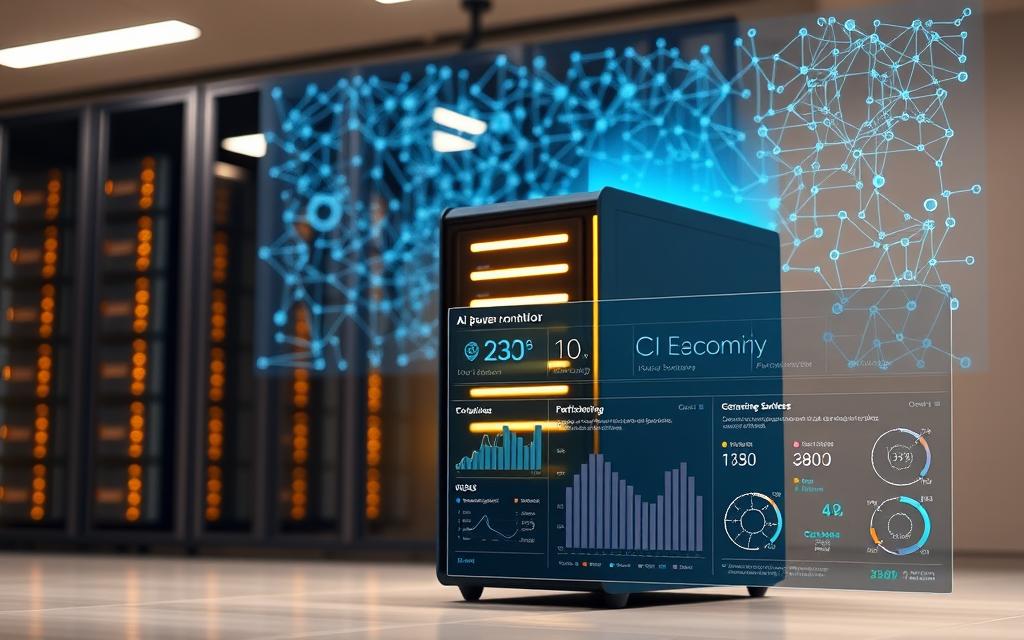
CPU performance improves when AI manages load balancing. Nginx Plus with self-learning capabilities provides advanced load balancing . This improves throughput by 40%.
- Automatic workload analysis and optimal distribution
- Predict resource requirements based on usage history
- Dynamic adjustment of parameters according to application type
- Identify and address performance issues immediately
The combination of these technologies creates an optimal system. The server learns from user behavior and continuously improves itself.
Smart resource management and cost savings
In a world where digital infrastructure costs are rising, smart VPS server resource management is important. New technologies make it possible to save thousands of shekels every month. It does this without ceasing to achieve great results.
Platforms like AWS Auto Scaling and Azure Autoscale can save up to 45% in costs. This is due to smart resource management.
Real-time resource consumption analysis
Advanced monitoring systems accurately identify resource usage. Tools like CloudHealth and Cloudability use artificial intelligence. They identify unusual consumption patterns.
Predicting future loads and automatic scaling
Auto-scaling technology analyzes historical trends. Kubernetes with HPA allows for automatic addition or removal of resources. This is done based on demand.
These systems achieve savings of 35% while improving response times.
Data-driven savings strategies
The FinOps approach combines deep data analysis with automated decision-making. Cloud economics principles are implemented through tools that shut down servers during off-peak hours. They move loads between cheaper regions.
These strategies include using Reserved Instances and Spot Instances for additional savings.
Solving common problems on VPS servers with AI tools
Artificial intelligence tools are changing the face of VPS server problem detection. They identify problems quickly and address them effectively. This saves time and prevents downtime.
Identifying and treating bottlenecks
Systems like AppDynamics identify bottlenecks in code and infrastructure with 90% accuracy. They conduct comprehensive system diagnostics and locate weak points in real time. Early identification of overloads allows for immediate treatment.

Automatic fault diagnosis
Platforms like Splunk and Elastic Stack use machine learning to perform root cause analysis . They identify the source of the problem in 80% of cases within minutes. Anomaly detection technology detects anomalies in server activity patterns and alerts you immediately.
Prevent downtime through fault prediction
Tools like PagerDuty and Opsgenie implement predictive maintenance . They reduce resolution time by 60%. The systems analyze historical data and predict potential failures. Continuous monitoring and advanced algorithms identify early warning signs and enable preventive maintenance before a failure occurs.
Advanced backup and recovery for VPS systems
In the digital age, protecting critical data has become very important. VPS servers need advanced backup strategies. This ensures that the business continues to operate without interruption.
Solutions like Veeam and Acronis offer automated backup. They use AI technologies to restore data in a very short time.
Setting clear RTO/RPO goals is the first step in a disaster recovery strategy. AWS Backup and Azure Backup provide intelligent incremental backups. They save up to 70% of storage space.
Integrating snapshot management allows for the creation of multiple recovery points. This makes servers more efficient.
Tools like Bacula and Amanda use machine learning to optimize backup windows. The technology recognizes usage patterns and schedules backups during off-peak hours.
Real-time data replication ensures that data is always up-to-date. It stores data in multiple geographical locations.
| Backup solution | Average RTO time | Storage savings | Special features |
|---|---|---|---|
| Veeam | 15 minutes | 60% | AI-based backup |
| Acronis | 15 minutes | 65% | Protection against extortion |
| AWS Backup | 20 minutes | 70% | Full cloud integration |
| Bacula | 30 minutes | 55% | Machine learning for scheduling |
Choosing a backup strategy depends on your business needs. It is important to set up regular testing processes. This will ensure that your backups are healthy and can be quickly restored.
Future Trends in VPS Server Maintenance
The world of server maintenance is undergoing significant change. In 2025, technological innovations will change the way VPS servers are managed. According to a Gartner study, approximately 70% of organizations are expected to use hybrid infrastructures by 2026.
The combination of new technologies with artificial intelligence will create new possibilities.
Emerging technologies in 2025
New technologies are changing the rules of the game. Edge computing allows data processing close to the source, which dramatically reduces response times.
Serverless architecture eliminates the need to manage traditional infrastructure. Quantum computing technology opens doors to complex calculations at speeds never seen before.
The impact of generative AI on server maintenance
Tools like ChatGPT and GitHub Copilot are changing the way maintenance scripts are written. Studies show a 200% increase in productivity among developers who use these tools.
Artificial intelligence writes automated code, identifies bugs, and suggests solutions in real time. Green computing processes become more efficient when artificial intelligence analyzes energy consumption and optimizes resource use.
Integration with hybrid cloud systems
Combining private VPS servers with public cloud services creates maximum flexibility. Organizations can take advantage of the best of both worlds: local security with global scaling.
The hybrid solution allows for dynamic load shifting between different environments as needed.
Containers and microservices infrastructure
Kubernetes and Docker Swarm have become industry standards, with 85% adoption in large organizations in Israel. Containers enable rapid application deployment, better isolation of services, and efficient resource management.
Microservices architecture simplifies maintenance and allows for point updates without shutting down the entire system.
Choosing the right VPS provider for your AI needs
Choosing the right VPS provider for AI projects requires a good understanding of your technical and business needs. Providers like DigitalOcean, Vultr, and Linode offer GPU servers at affordable prices. They are cost-effective compared to high-performance computing from AWS and Azure.
Small and medium-sized businesses can achieve advanced capabilities without investing a lot of money.
For Israeli businesses that want 24/7 support in Hebrew, local providers like Triple-C and Bezeq International offer solutions. They commit to an SLA of 99.95% availability. This ensures continuity and high reliability.
The big advantage of local providers is the immediate availability of Hebrew-speaking support teams. They are tailored to the unique needs of the Israeli market.
European companies like OVHcloud and Hetzner are leaders in compliance standards . They are GDPR compliant. They offer an excellent balance between price and performance, while maintaining strict European data protection standards.
| Service provider | Location | GPU price starting from | Availability SLA | support |
|---|---|---|---|---|
| DigitalOcean | global | $90/month | 99.99% | English 24/7 |
| Triple C | Israel | ₪450/month | 99.95% | Hebrew 24/7 |
| OVHcloud | Europe | €80/month | 99.95% | Multilingual |
Practical tips for upgrading and improving server performance
Improving server performance requires a methodical approach. You need to use advanced performance tuning techniques. The following tips will help you achieve impressive results in a short time.
Code and application optimization
Upgrading to PHP 8.3 with OPcache and JIT compiler improves performance by 35%. Configuring PHP-FPM saves memory resources and speeds up response times. It is important to configure a maximum number of processes according to memory and expected load.

Efficient database management
Proper database optimization dramatically improves website speed. Setting InnoDB buffer pool in MySQL tuning improves performance by 40%. It is a good idea to allocate 70-80% of memory to the buffer pool for dedicated data servers.
| MySQL parameter | Recommended value | Expected improvement |
|---|---|---|
| innodb_buffer_pool_size | 70% of memory | 40% speed |
| query_cache_size | 256MB | 25% fewer queries |
| max_connections | 200-500 | 15% stability |
Advanced network settings
CDN integration with Cloudflare or Fastly reduces loading times by 60% for users in Israel. Enabling HTTP/2 and Gzip compression reduces traffic volume and improves the browsing experience.
Using smart caching
Implementing Redis or Memcached speeds up page loading. Application-level caching saves up to 70% of database calls. Combining all techniques creates a fast and stable server environment.
conclusion
The future of server maintenance is reaching a tipping point. New technologies like artificial intelligence are changing the way VPS is managed. Companies like Amazon Web Services and Microsoft Azure are showing how this can change the world.
Moving to automated management saves valuable time and resources, allowing IT staff to focus on more important tasks.
Implementing best practices in VPS maintenance ensures good performance. Advanced monitoring tools like Datadog or New Relic identify problems early. Automating routine tasks frees up staff for strategic tasks.
The ROI from investing in smart tools proves itself in just a few months. This proves the success of the investment.
Digital transformation in servers is no longer an option, but a necessity. Businesses that adopt a proactive approach to maintenance see dramatic improvements. The technologies we reviewed are available today.
Investing in smart and advanced infrastructure will ensure that your business remains competitive and relevant in the years to come.
Frequently Asked Questions (FAQ)
What is a VPS server and why is it important for my business?
A VPS server is a virtual server that provides dedicated resources. It offers complete isolation and up to 60% cost savings. Companies like DigitalOcean and Linode offer 99.99% uptime.
How does artificial intelligence improve my server maintenance?
AI tools like IBM Watson and Microsoft Azure AI detect 92% of problems before they happen. They reduce downtime by 85%. Systems like DataDog and New Relic use machine learning algorithms to detect anomalies.
How much does VPS server maintenance cost in 2025?
Costs vary based on needs. AWS Auto Scaling and Azure Autoscale can save up to 45% in costs. Israeli providers like Triple-C and Bezeq International offer competitive packages.
How do I protect my server from cyber threats?
Security is critical! Cloudflare and Akamai report a 300% increase in DDoS attacks. Palo Alto Networks AI solutions detect and prevent 99.5% of advanced threats.
Is it possible to automate server maintenance?
Absolutely! Ansible and Puppet automate 80% of maintenance tasks. Jenkins combined with Docker reduces deployment times by 65%. Terraform enables infrastructure management as code.
Which VPS provider is recommended for AI applications?
It depends on your needs. DigitalOcean, Vultr, and Linode offer GPU-equipped VPS servers. For Israeli businesses, local providers like Triple-C provide a 99.95% SLA .
How to improve the performance of my existing server?
There are some great ways! Optimizing MySQL with InnoDB buffer pool improves performance by 40%. Using Redis or Memcached with AI capabilities reduces response times by 50%.
How to identify and resolve server performance issues?
Advanced monitoring tools are key! Splunk and Elastic Stack use ML to identify root cause in 80% of incidents. PagerDuty and Opsgenie reduce average resolution time by 60%.